Why Do Clocks Use IIII Instead of IV for 4?
Why do clocks use IIII instead of IV for 4? Learn what the clockmaker's four means, its history, and why no single explanation has been proven.
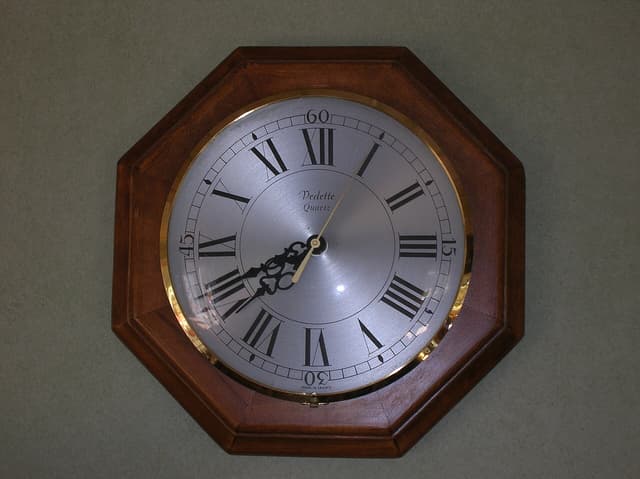
Why Is 4 Written as IIII on Some Clocks?
Many clocks and watches write four as IIII instead of the modern Roman numeral IV. This is usually called the clockmaker's four.
The short answer is that IIII has genuine historical precedent, and clockmakers preserved it as a tradition. Its visual balance on a circular dial may also have helped the form survive.
What we do not have is one proven event that explains why every clockmaker adopted IIII. Several popular stories exist, but the history is less tidy than any one of them suggests.
IIII Was a Real Way to Write Four
Today, most Roman numeral charts give IV as the standard form of 4. IV uses subtractive notation: I before V means one less than five.
IIII uses the older and simpler additive idea instead: I + I + I + I = 4.
Historical Roman numerals were not always written according to the strict rules taught in modern classrooms. Additive and subtractive forms existed alongside one another, and conventions changed across different periods and uses.
A useful example comes from the UK National Archives. Its guide to medieval Latin documents shows the classical form IV but notes that four was often written as iiii or iiij in medieval records, and was not usually written as iv.
Modern research on numerical notation also distinguishes between older additive Roman numerals and the subtractive form that eventually became predominant. So IIII is not simply a centuries-old spelling mistake.
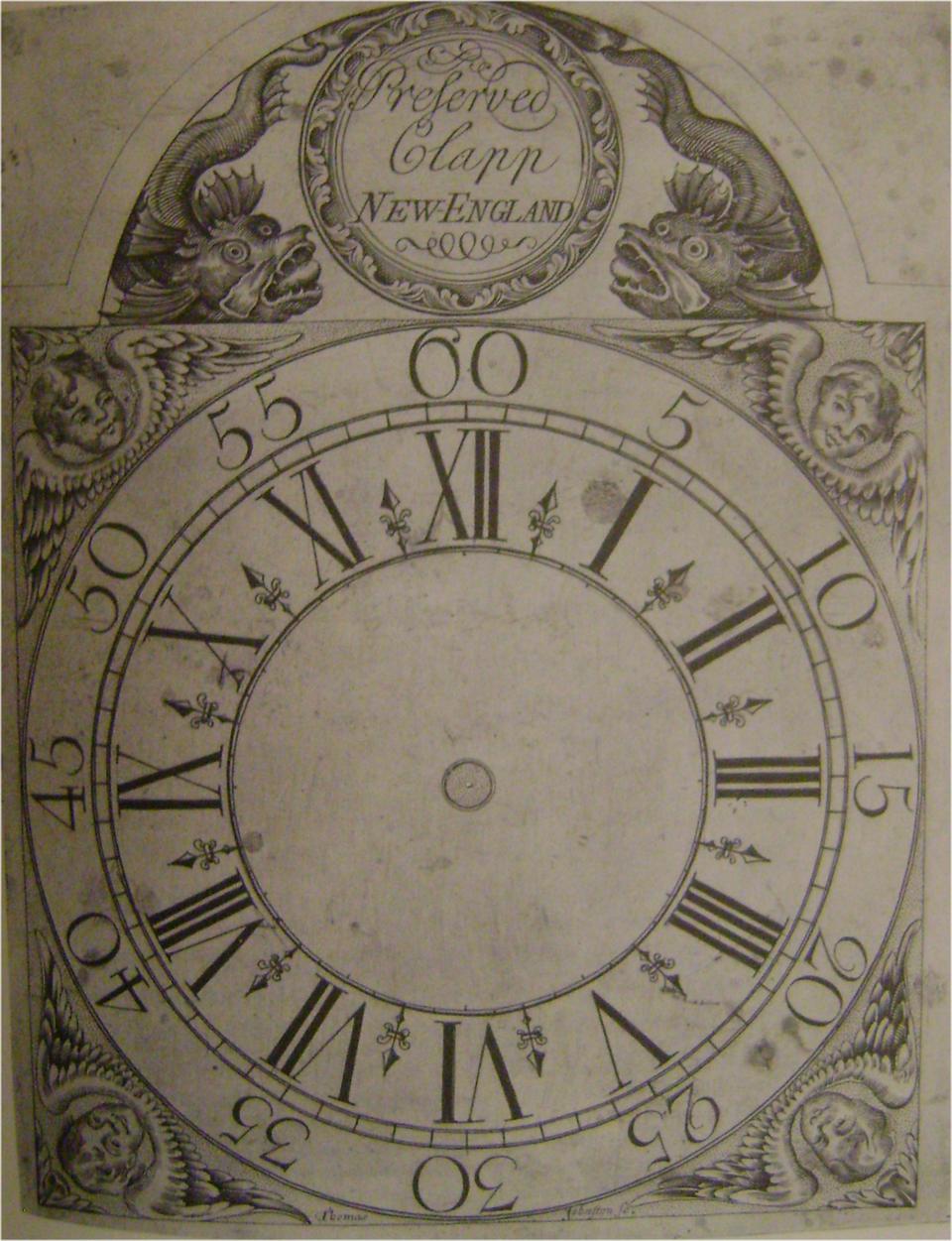
Why Did Clockmakers Keep IIII?
History explains why IIII was available to clockmakers. It does not completely explain why it became so closely associated with clock faces.
One likely factor is tradition. Early European clockmakers inherited a numbering system in which additive forms were still familiar. Once IIII became a recognizable feature of Roman-numeral dials, later clockmakers had little reason to abandon it.
Design may have reinforced that tradition. With IIII, the dial forms a neat visual sequence: I, II, III and IIII; then V, VI, VII and VIII; then IX, X, XI and XII.
IIII also has more visual weight than IV, which can help it balance the much wider VIII on the opposite side of a traditional dial.
The Seiko Museum describes visual balance as one of the commonly cited explanations and notes that IIII became a longstanding clockmaking convention. That makes aesthetics a good explanation for why the style survived, even if it cannot prove exactly where the practice began.
There Is No Proven Single Explanation
This is where many explanations of the clockmaker's four become more certain than the evidence allows.
There are several theories about IIII: that it was easier to read, that it looked more balanced, that clockmakers were following older numeral traditions, or that a ruler demanded the change.
You may also encounter the Jupiter story. Jupiter's name could be written IVPPITER in Latin, so one story claims that Romans avoided IV because it resembled the beginning of the god's name.
It is memorable, but that does not make it established history. Investigations of the clock-face question have repeatedly noted that the Jupiter explanation and various royal legends are difficult to prove.
The safest conclusion is therefore not that one theory has won. IIII already had historical legitimacy, and a mixture of convention, readability and visual design probably helped keep it on clocks.
Is IIII a Correct Roman Numeral for 4?
It depends on the context.
If you are writing Roman numerals using the modern convention taught in schools and used by most converters, 4 is IV.
If you are looking at a historical document, inscription, clock or watch, IIII can be completely intentional. Historical sources show that additive forms were genuinely used, and the clockmaking tradition has preserved IIII for centuries.
So IV is the normal modern answer, while IIII is a historical and clockmaking variant. Calling every IIII an error removes the context that makes the form interesting in the first place.
Do All Roman Numeral Clocks Use IIII?
No. IIII is common, but it is not a rule that every Roman-numeral clock must follow.
Some clocks use IV, while others use IIII. That variation is another reason to be cautious about explanations claiming that IV was somehow impossible or universally forbidden.
One famous counterexample is the clock at the Palace of Westminster in London. Its dial uses the ordinary subtractive form IV.
A clockmaker can choose either form. IIII simply became distinctive enough that it is now widely known as the clockmaker's four.

IIII vs IV: What Should You Use?
For ordinary modern Roman numerals, use IV for 4.
For a traditional clock face, IIII is an established alternative and can be used deliberately as part of the design.
The difference is a good reminder that Roman numerals were used for far longer, and with far more variation, than the small set of rules most of us first learn at school.
Sources
- 1.Dating Latin documents: Roman numerals
The National Archives
- 2.Gradience as a cognitive principle for evaluating numerical notations
Proceedings of the National Academy of Sciences
- 3.The Mystery of Numerical Notation on the Dial Plate
Seiko Museum Ginza
- 4.Why do clocks have IIII for 4 o'clock rather than the Roman numeral IV?
The Washington Post
- 5.Roman Clock.JPG
Notwist / Wikimedia Commons — Public domain
- 6.Preserved Clapp clock face
Thomas Johnston / Wikimedia Commons — Public domain
- 7.Westminster clock face
Chris Downer / Wikimedia Commons — CC BY-SA 2.0