Why Is Fahrenheit So Weird?
Why does Fahrenheit use 32 degrees for freezing and 212 for boiling? The strange numbers make more sense once you understand the history of thermometers.
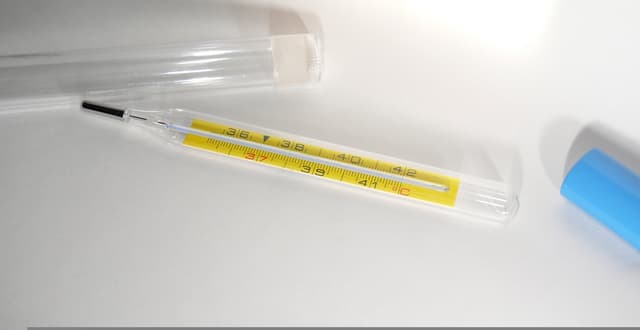
Why 32 and 212 look so strange
32°F is freezing. 212°F is boiling. Between them are 180 degrees. None of those numbers looks particularly natural.
But the Fahrenheit scale was not designed from a clean mathematical starting point. It grew out of an early attempt to make thermometers more consistent, and the strange numbers make considerably more sense once you see the problem Daniel Gabriel Fahrenheit was trying to solve.
Thermometers used to disagree
Temperature seems like something that should be easy to measure. Put a thermometer somewhere, read the number and compare it with another thermometer.
In the early 18th century, it was not that simple.
Thermometers were made with different liquids and calibrated against different reference points. Two instruments could therefore give different numbers for the same temperature. For scientists trying to record weather, boiling points or laboratory experiments, that made measurements difficult to compare.
Daniel Gabriel Fahrenheit, a German born instrument maker working in the Netherlands, became interested in making thermometers that were more consistent. His work was part of a broader effort by European scientists to turn temperature into something that could be measured and reproduced rather than simply described.
That is the real story behind Fahrenheit. It starts with the thermometer, not the numbers.
Fahrenheit learned from an earlier scale
Before Fahrenheit developed his own system, the Danish astronomer and instrument maker Ole Rømer had developed a temperature scale of his own.
Fahrenheit visited Rømer in Copenhagen and adopted the basic idea of using reproducible reference temperatures. Historical accounts indicate that Fahrenheit refined the divisions used by Rømer, giving his instruments greater resolution.
This was an important step. A temperature scale is only useful if its divisions can be reproduced on another instrument.
Fahrenheit spent years improving thermometers and became particularly associated with mercury thermometers. Mercury expanded predictably and remained useful across a broad temperature range, making it well suited to precise measurement.
By 1724, Fahrenheit was presenting his work to the Royal Society in London. The Society's surviving records include his experiments with boiling liquids and his work on thermometric measurements.
Why did Fahrenheit start at 0?
This is where the scale begins to look especially strange.
Fahrenheit's early zero was based on a very cold mixture of ice, water and salt. The salt lowered the mixture's freezing temperature, producing a temperature substantially below the freezing point of ordinary water.
This was not an attempt to define the coldest temperature nature could possibly produce.
Fahrenheit had no modern concept of absolute zero. He needed a practical low temperature reference that could be reproduced in his laboratory.
0°F was therefore a calibration point, not the bottom of the temperature scale.
So why is water freezing at 32°F?
Fahrenheit's scale also used a mixture of ordinary ice and water as another reference point.
He assigned that temperature 32 degrees. Human body temperature was assigned 96 degrees on the scale he described.
The numbers were useful because the scale was designed to be divided into manageable intervals. Ninety six is particularly convenient mathematically because it can be divided evenly by several small numbers, including 2, 3, 4, 6, 8 and 12.
That made subdivision practical at a time when temperature was being marked physically onto thermometer tubes rather than displayed digitally.
But historical explanations often become too confident here. Historians have proposed different explanations for exactly why Fahrenheit settled on particular numbers and how the scale evolved.
The safest conclusion is that Fahrenheit's scale grew out of practical calibration points and convenient subdivisions. The precise reasoning behind every numerical choice is not completely established.
Where did 212°F come from?
The boiling point of water eventually became 212°F.
At standard atmospheric pressure, water boils at 212°F while it freezes at 32°F. That creates an interval of 180 degrees.
The familiar Fahrenheit scale therefore divides the freezing to boiling interval of water into 180 equal degrees, compared with 100 degrees on the Celsius scale.
But the historical development was not as tidy as modern conversion charts make it appear.
Fahrenheit's thermometers and scales evolved over time, and historical evidence indicates that he worked with more than one calibration arrangement. The relationship between the ice point, body temperature and boiling point developed during the years in which he was refining his instruments.
The important point is that 212°F was not simply a number Fahrenheit pulled from nowhere. It emerged from the developing system of thermometric reference points and the measurement of boiling water.
Why are there 180 degrees?
This is probably the part that makes Fahrenheit look most arbitrary.
Celsius gives water 100 degrees between freezing and boiling. Fahrenheit gives it 180.
Part of the answer is historical. Fahrenheit's scale evolved from earlier temperature scales and calibration practices rather than being designed as a completely new decimal system. The resulting divisions were useful for making and reading physical thermometers.
The number 180 is also highly divisible, which makes many fractional subdivisions convenient.
But the precise historical reason for every numerical choice is not settled. Contemporary and later writers proposed competing explanations for the origin of Fahrenheit's scale and its relationship to earlier systems.
The history of Fahrenheit is not a puzzle with one perfectly documented answer.
Fahrenheit's bigger achievement was the thermometer
It is easy to remember Fahrenheit as the man who gave us an inconvenient temperature scale.
His more important contribution was improving the measurement of temperature itself.
His mercury thermometers could produce more consistent readings than many earlier instruments. Mercury expanded predictably, did not behave like some other liquids inside glass and remained useful across a relatively broad temperature range.
That allowed Fahrenheit to make measurements that were useful beyond simply telling someone whether the day was cold.
He studied boiling liquids, freezing water and the relationship between boiling temperature and atmospheric pressure. His 1724 work submitted to the Royal Society included experiments involving boiling liquids and thermometric measurements.
The scale became valuable because the instrument behind it was becoming valuable.
Water does not always boil at 212°F
There is one detail modern weather apps and cooking thermometers quietly hide.
212°F is the boiling point of water at standard atmospheric pressure.
Change the pressure and the boiling point changes.
At higher elevations, atmospheric pressure is lower, so water boils at a lower temperature. Fahrenheit himself investigated this relationship, and his experiments helped establish that boiling temperature depends on pressure.
So water boiling at 212°F is useful shorthand, not a universal rule that applies at every location.
What happened after Fahrenheit?
The scale became widely adopted, particularly in Britain and eventually throughout much of the English speaking world.
That adoption had as much to do with Fahrenheit's instruments and the spread of standardized thermometry as with the numbers themselves. His thermometers gained a reputation for consistency, and the scale became embedded in scientific and everyday measurement.
Then, in 1742, Swedish astronomer Anders Celsius introduced the scale that would eventually become the dominant metric temperature system.
Celsius made the freezing to boiling interval of water 100 degrees. It fitted naturally into the emerging metric system and was easier to relate to the decimal structure used by other metric units.
But Fahrenheit was already established.
Once a temperature scale becomes part of weather records, household thermometers, engineering, medicine and everyday language, replacing it is no longer simply a matter of choosing the mathematically nicest option.
It becomes a matter of changing a culture's measuring system.
Why is Fahrenheit still used?
Today, most countries use Celsius for everyday temperature. The United States is the major example where Fahrenheit remains the normal scale for weather and everyday temperatures.
That persistence is mostly historical.
There is nothing physically special about Fahrenheit degrees. A degree Fahrenheit is simply a smaller temperature interval than a degree Celsius.
A change of 1°C equals a change of 1.8°F.
The relationship between the scales is straightforward.
°F = (°C × 9/5) + 32
°C = (°F − 32) × 5/9
So 20°C becomes 68°F.
The mathematics is straightforward. The history is not.
Fahrenheit is not actually as random as it looks
Seen on a modern thermometer, 32°F and 212°F look like arbitrary numbers.
Seen in the context of 18th century thermometry, they tell a different story.
Fahrenheit was working at a time when scientists were still figuring out how to make thermometers agree with one another. His scale grew from earlier work, practical reference temperatures, physical instruments and a need for useful subdivisions. The exact reasoning behind some of the numbers remains disputed, but the overall problem he was solving is clear.
The scale also outlived the problem that created it.
Modern temperature measurement no longer depends on Fahrenheit's original ice and salt reference. The SI system now defines temperature through the kelvin and the fixed numerical value of the Boltzmann constant. Fahrenheit is connected to that modern system through an exact conversion rather than through its original historical calibration.
That is why Fahrenheit looks strange today.
We are looking at the finished numbers without seeing the instrument, the experiments and the measurement problems that produced them.
And once you see that history, 32°F does not look quite so weird anymore.
Sources
- 1.Kelvin: History
National Institute of Standards and Technology
- 2.Fahrenheit's Thermometric Work
The Royal Society
- 3.
- 4.Fahrenheit and the Birth of Precision Thermometry
American Physical Society
- 5.The Kelvin
Bureau International des Poids et Mesures
- 6.Temperature
National Institute of Standards and Technology