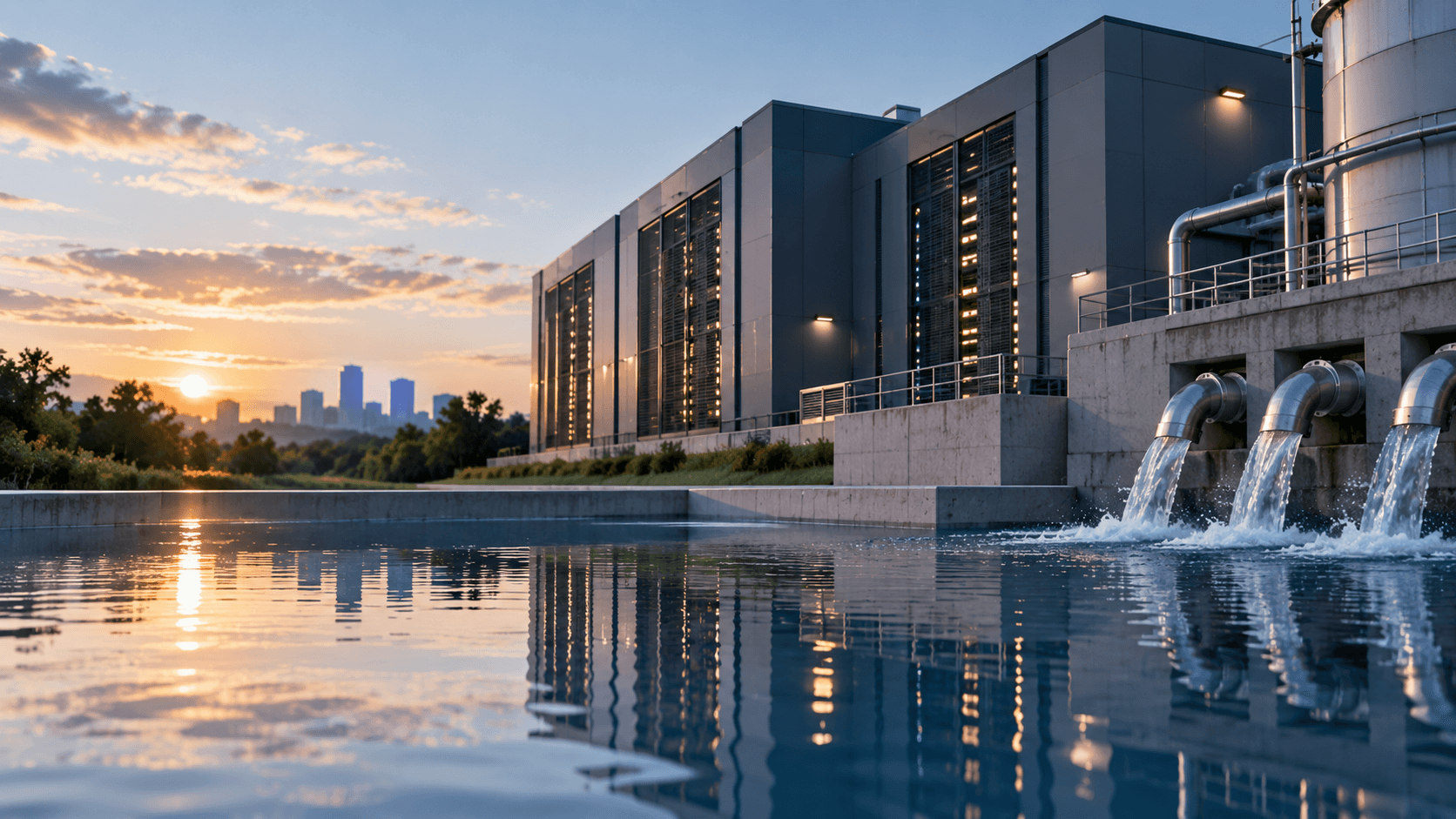
How Much Water Does One AI Prompt Use?
There is no single universal number for how much water a single AI prompt uses.
It depends on the AI model, how large it is, how efficient it is, how much computing power it needs, and other technical factors. Every model is different, so the amount of water associated with running it can also be different.
Google published a methodology for measuring the environmental impact of Gemini and estimated that a median Gemini Apps text prompt consumed 0.26 mL of water, roughly 5 drops of water.
Google also calculated that the same median prompt used 0.24 Wh of energy and produced 0.03 g CO₂e.
Then there's a 2023 academic study that estimated that 10–50 medium-length responses from GPT-3 could consume around 500 mL of water, depending on where and when the model was running.
By “where and when,” it basically means that the data center running the AI can be in a different location, have a different climate, use a different cooling system, and get its electricity from a different source. All of these things can change how much water is associated with running the AI.
And this is why you should be careful with claims like “one AI prompt uses a bottle of water.” That isn't a universal measurement for every AI prompt. Different studies can produce very different numbers because they measure different systems, models, locations, and parts of the water footprint.
Why Can the Number Change So Much?
There are several variables.
1.Different AI Models
A small AI model and a huge AI model don't necessarily require the same amount of computing power. A bigger and more complex model can require more computation to give you an answer, while a smaller or more efficient model may need much less.
2.Different Prompts
Not every prompt requires the same amount of work. Asking AI a simple question and getting a short answer isn't the same as asking it to write a 5,000-word article, analyze a large file, generate an AI image, or create a video. The more computing the AI needs to do, the more energy it can use.
3.Different Hardware
AI runs on specialized hardware such as GPUs and other AI accelerators. Newer and more efficient hardware can do more work while using less electricity. Less electricity can also mean less water associated with cooling and electricity generation.
4.Different Data Centers
AI doesn't run in one giant computer somewhere. It runs across data centers, and different data centers can use different cooling systems. Some rely more on water-based cooling, while others can use air cooling, liquid cooling, or other methods. So the same AI model running in two different data centers can have a different water footprint.
5.Climate
The location of the data center matters too. A data center in a hot climate can have different cooling requirements compared to one in a cooler climate.
And there's another important part, water availability. Using the same amount of water in a place with plenty of water isn't necessarily the same environmental problem as using it in a place that's already dealing with water shortages.
6.Electricity Source
The water doesn't only come from cooling the computers. The electricity used to run AI can also have a water footprint. Some methods of generating electricity require water for cooling and other processes.
So even if a data center itself uses very little water, the electricity powering it can still have an indirect water footprint.
7.What the Researcher Counts
This is really important. Not every study measures water usage in the same way.
One study might only count the water directly used to cool the data center. Another might also count the water associated with generating the electricity used by the data center. Some broader estimates can even include water used in parts of the AI hardware supply chain, such as semiconductor manufacturing.
So when you see someone say “one AI prompt uses X amount of water,” don't immediately assume that number applies to every AI model everywhere. You also need to ask what they measured, where they measured it, and what they included in the calculation.
Where Does All That Water Go?
So we know AI can have a water footprint, but where does all that water actually go?
One of the biggest direct uses is cooling. AI runs on powerful computers that generate a lot of heat. Data centers need to constantly remove that heat to keep the hardware running safely. Some cooling systems use water, and when that water absorbs heat, some of it can be lost through evaporation.
But that's only part of the story.
The electricity used to run AI can also have a water footprint. Some power plants use water during electricity generation, mainly for cooling. In some regions, this indirect water use can be larger than the water used directly at the data center.
And then there is the hardware itself. AI needs specialized chips, and manufacturing semiconductors requires large amounts of water as part of the production process.
So when we talk about the water footprint of AI, we're not talking about one giant tank of water being poured over computers.
The footprint is spread across several parts of the system: data-center cooling, electricity generation, and hardware manufacturing.
The amount coming from each part can vary depending on how and where the AI is being run.
How Much Water Does AI Use in Total?
A 2025 Patterns study estimated that AI systems could have a water footprint of roughly 312–764 billion liters in 2025.
That's an enormous range, and there's a reason for it.
Companies generally don't publish enough data to clearly separate AI workloads from everything else running inside their data centers. Researchers therefore have to estimate how much of the overall data-center activity is attributable to AI.
So these numbers shouldn't be treated as an exact global water meter.
To put the 2025 estimate into perspective, 312–764 billion liters would be roughly equivalent to filling 125–306 billion 2.5-liter bottles.
Future estimate
A 2026 Water Research study projects that AI's global water footprint could reach 4.2–6.6 billion cubic meters per year by 2027.
That's 4.2–6.6 trillion liters per year.
But there's an important detail here, this is a modeled projection, not a direct measurement of every AI data center around the world.
Water withdrawal and water consumption are also not the same thing. Water withdrawal is the amount taken from a source, while water consumption refers to the portion that is not immediately returned, such as water lost through evaporation.
Some analyses put the actual consumed portion of the 2027 projection at roughly 380–600 billion liters. However, these figures depend on the assumptions used to estimate AI's future electricity and infrastructure growth.
So when you see numbers like 6.6 trillion liters, don't assume that all of that water is simply disappearing.
And remember, these are still estimates, not an exact global measurement. There isn't enough public data to accurately separate AI's water use from all the other workloads running inside data centers.
What is clear, however, is that as AI keeps growing, the amount of water associated with running it could grow with it.
Is AI Actually Causing Water Problems?
Yes, in some places it can, but the issue isn't as simple as saying “AI is running out of water.”
The bigger concern is where the data centers are located.
A data center might use a relatively small amount of water compared to global water use, but if it's built in an area that is already dealing with water shortages, that extra demand can put more pressure on local water supplies.
This is already becoming a concern in parts of the U.S. A 2025 Ceres analysis found that around 32% of U.S. data centers are located in areas experiencing high or extremely high water stress.
And this isn't only about AI. Data centers also run cloud services, websites, streaming services, storage, and many other workloads. But the rapid growth of AI is driving demand for more and larger data centers, which can increase the pressure.
Ceres also found that in the Phoenix region, annual water use associated with data-center electricity demand could increase by around 400% as planned facilities come online, while cooling-related water use could increase by around 870%.
So the real question isn't just “How much water does AI use?”
It's also “Where is that water being used?”
Using the same amount of water in an area with plenty of available water is very different from using it in a region already struggling with drought or water shortages.
That's why AI's water footprint is becoming an environmental concern, not necessarily because every AI prompt uses a huge amount of water, but because billions of prompts and rapidly expanding data-center infrastructure can create significant demand in specific places.
Where Is AI's Water Use Becoming a Problem?
The biggest concern isn't that AI will suddenly use up all the world's water.
It's that AI infrastructure can be built in places that already have limited water resources.
This is particularly important in parts of the United States where data centers are expanding rapidly.
Arizona is a good example. The Phoenix area has become a major data-center hub, but it is also one of the parts of the country where water availability is already a major concern.
Adding more data centers means adding more demand for both cooling water and the water associated with producing the electricity they consume.
And Phoenix isn't an isolated case. Data centers are also expanding in other parts of the U.S. where drought, groundwater depletion, or competition for water already exists.
This creates an interesting problem.
An AI company might serve users thousands of miles away, while the environmental impact of running that AI is concentrated around the data center and the infrastructure supplying it with electricity and water.
The same amount of AI usage can therefore have very different consequences depending on where the infrastructure is located.
That's why researchers increasingly focus on local water stress, rather than simply looking at one global number.
A trillion liters spread across the entire planet sounds very different from billions of liters being demanded from one already-stressed water basin.
And as more AI data centers are planned, this local issue could become more important.
The question isn't just whether there is enough water globally.
It's whether there is enough usable water in the right place, at the right time, without putting additional pressure on people and ecosystems that already depend on it.
What Is AI Doing to the Environment Overall?
Water is only one part of AI's environmental footprint.
The bigger picture also includes electricity, carbon emissions, land, raw materials, and electronic waste.
Electricity
AI requires a huge amount of computing power. Global data-center electricity demand was estimated at around 448 TWh in 2025 and could reach roughly 945 TWh by 2030, according to a 2026 United Nations University analysis.
More electricity demand means more pressure on power grids and, depending on how that electricity is generated, potentially more greenhouse-gas emissions and water use.
Carbon Emissions
The electricity used by AI can also produce carbon emissions. How much depends heavily on the energy source. Running a data center on a grid with a lot of fossil-fuel generation can have a much larger carbon footprint than running the same workload on cleaner electricity.
But there's an important catch:
Cleaner electricity doesn't automatically mean zero environmental impact.
Different energy sources have different water and land requirements, so reducing one environmental problem can sometimes increase another.
Land
AI doesn't exist only inside computers. Data centers require physical buildings, electricity infrastructure, cooling equipment, transmission lines, and the land needed to build all of it.
The UNU analysis projects that the associated land footprint of AI infrastructure could exceed 14,500 square kilometers by 2030.
Hardware and Raw Materials
AI also requires huge amounts of specialized hardware. That means more semiconductor manufacturing and more demand for the raw materials needed to build processors, servers, networking equipment, batteries, and other infrastructure.
Those materials have their own environmental costs, including mining, processing, energy use, and water consumption.
Electronic Waste
And eventually, hardware becomes outdated. AI hardware is developing extremely quickly, which means older servers and accelerators can be replaced with newer generations.
The United Nations University estimates that AI infrastructure could contribute up to 2.5 million tonnes of electronic waste per year by 2030.
So the environmental impact of AI isn't just what happens when you type a prompt. It's the entire system behind that prompt, from manufacturing the chips to powering the data center, cooling the machines, and eventually dealing with the hardware when it reaches the end of its useful life.
Can We Reduce AI's Environmental Impact?
Yes.
And this is where the conversation becomes more useful than simply saying “AI uses water.”
A lot of the environmental impact can be reduced through better technology, better decisions, and better planning.
More Efficient AI Models
Not every task needs the largest AI model available. If a smaller model can answer a simple question just as well, using it can reduce the amount of computing required.
The same principle applies to output length, image resolution, and video generation. A simple text response generally requires far less computing than generating a high-resolution image or video.
More Efficient Hardware
New generations of AI chips can perform more computation using less electricity. If AI companies can get more work done with less power, that can reduce both energy demand and the water associated with cooling and electricity generation.
Better Cooling Systems
Data centers can also reduce their direct water use by using more efficient cooling technologies. Some facilities can use air cooling or closed-loop liquid cooling systems, while others can use recycled or non-potable water instead of relying heavily on fresh drinking-quality water.
There isn't one cooling system that works perfectly everywhere. The best option depends on the local climate, water availability, electricity supply, and the type of data center.
Build Data Centers in Smarter Locations
Where a data center is built matters enormously. Putting a massive facility in a water-stressed region can create problems that wouldn't exist in a location with more available water.
Companies can consider water availability, local infrastructure, climate, electricity sources, and the needs of nearby communities before building.
Use Cleaner Electricity
Using lower-carbon electricity can reduce the carbon footprint of AI. But companies also need to consider the water and land requirements of those energy sources instead of looking at carbon alone.
The goal should be to reduce the overall environmental footprint, not simply move the problem somewhere else.
Make Companies Show the Numbers
One of the biggest problems today is simply a lack of transparent data. Companies often don't provide enough information to determine exactly how much water or electricity is being used by their AI workloads.
That makes it difficult for researchers, governments, investors, and ordinary users to compare AI systems properly. Better reporting would make it much easier to identify where the biggest problems are and what solutions actually work.
What About Individual Users?
You don't need to stop using AI because of its water footprint. For most people, the bigger environmental impact comes from the scale of AI infrastructure, not from one person asking a few questions.
But users can still make sensible choices. Use the smallest model that does the job when possible. Don't generate dozens of unnecessary high-resolution images or videos if one will do. Avoid unnecessarily long outputs when a short answer is enough.
These individual actions won't solve AI's environmental footprint by themselves. But when billions of interactions happen every day, efficiency at the user level can contribute to the bigger picture.
The biggest responsibility, however, sits with the companies building and operating the infrastructure.
So, Should We Be Worried About AI?
AI's environmental impact is real, but it's also easy to misunderstand.
One AI prompt isn't going to drain a lake.
The problem is the scale.
Billions of AI interactions, increasingly powerful models, huge data centers, growing electricity demand, cooling systems, semiconductor manufacturing, and rapidly changing hardware can add up to a significant environmental footprint.
And that footprint isn't distributed evenly.
Some places have plenty of water and electricity. Others are already dealing with drought, water shortages, stressed power grids, or limited infrastructure.
That's why the question isn't simply “Is AI bad for the environment?”
It's a much more useful question:
How do we keep the benefits of AI while reducing the resources it takes to run it?
The technology is becoming more efficient, but efficiency alone may not be enough if AI usage continues growing faster than those efficiency improvements.
Better models, better hardware, smarter cooling, cleaner electricity, responsible data-center locations, recycling, and much better environmental reporting can all help.
And for users, there's no need to panic over every prompt.
The bigger responsibility is making sure the enormous infrastructure being built to power AI grows in a way that doesn't simply move environmental costs onto communities and ecosystems that can least afford them.
AI may be digital from our perspective.
But the machines behind it still need water, electricity, land, minerals, and physical infrastructure.
Understanding that is the first step toward making AI more sustainable.