Why a Coin Toss Isn't as Random as It Looks
A coin toss looks like pure chance. But 350,757 real flips revealed a small physical bias. Here's what the experiment found and why heads is still essentially 50/50.
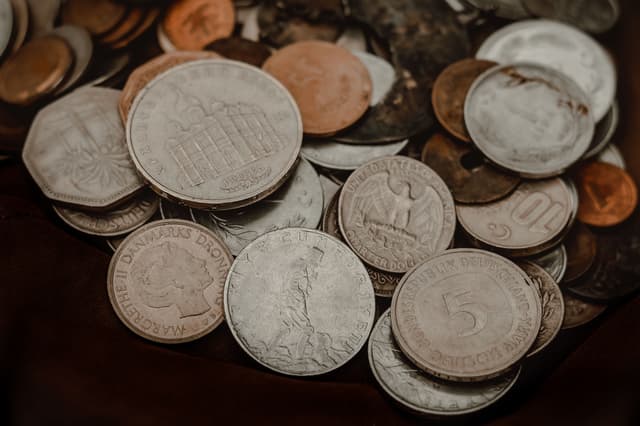
The coin is supposed to settle the argument
There is a reason the coin toss has survived for so long as a symbol of chance.
Two people disagree. Neither wants to give way. Someone produces a coin, asks for heads or tails, and sends the little disk spinning through the air. For a few seconds, the decision belongs to nobody.
Then the coin comes down.
It is hard to imagine a simpler randomizer. There is no computer, no complicated calculation and no visible hand deciding the result. Just a piece of metal, a flick of the thumb and gravity.
But the coin is carrying something into the air that we usually forget about.
It remembers how it started.
A flip is not quite the motion we imagine
In the idealized version of a coin toss, the coin rises, spins cleanly around an axis, turns over and comes back down. Every flip looks like a fresh beginning.
A real coin is less orderly.
It can leave the hand with its rotational axis tilted. That axis can move while the coin is in flight. The coin can wobble and precess, changing its orientation in ways that are difficult to see with the naked eye.
Those details are not just curiosities for physicists. They determine how much of the coin's initial state survives the flight.
In 2007, the mathematicians Persi Diaconis, Susan Holmes and Richard Montgomery turned that observation into a mathematical model of a naturally tossed coin. Their model predicted that a vigorously flipped coin should have a small tendency to land on the same side it started on.
Their estimate for ordinary flips was about 51 percent.
That sounds almost too small to matter. It is also exactly the kind of effect that can disappear inside ordinary experience.
A 51 percent prediction is hard to see one flip at a time
Consider what the prediction actually asks you to notice.
If a coin has a 51 percent chance of landing on its starting side, then out of 100 flips you might expect about 51 to do so. But random variation can easily push a small experiment away from that number.
Even a few hundred flips are not particularly persuasive if the effect you are looking for is only about one percentage point.
The researchers who tested the idea therefore needed something much larger.
Much larger.
Then researchers flipped the coin 350,757 times
The experiment eventually produced a number that is difficult to ignore: 350,757.
That was the number of coin flips collected for a study published in the Journal of the American Statistical Association in 2025. The experiment was designed specifically to test the prediction that a coin tends to land on the side it started on.
Across all those flips, the coin landed on its starting side 178,079 times.
The result was a same-side probability of about 50.8 percent. The study reported a 95 percent credible interval from 50.6 to 50.9 percent.
That is remarkably close to the roughly 51 percent predicted almost two decades earlier by the physics model.
The difference is tiny.
The evidence for the difference is not.
| Measurement | Result | 95% credible interval |
|---|---|---|
| Same starting side | 50.8% | 50.6–50.9% |
| Heads | 50.0% | 49.8–50.2% |
| Total recorded flips | 350,757 | — |
But there is a catch: heads is still basically 50/50
This is where the result can become misleading.
It is tempting to hear that coins land on their starting side about 50.8 percent of the time and conclude that a coin must therefore favour heads.
It does not.
The experiment was measuring something more specific: whether the coin ended on the same side it started on.
Imagine a coin beginning heads-up. The physical dynamics give it a slight tendency to finish heads-up. Now turn the coin over before another toss. The same effect gives tails a slight tendency to finish tails-up.
If the starting orientation is randomized, those two tendencies balance.
And that is what the researchers found. The estimated probability of heads was essentially 50 percent, with a 95 percent credible interval from 49.8 to 50.2 percent.
So the coin has a memory without having a meaningful preference for heads.
That distinction is the heart of the experiment.
The coin remembers. The person matters too.
The experiment revealed another wrinkle that makes the story less tidy.
The same-side effect was not identical for everyone.
Some people produced little or no detectable bias. Others produced substantially more. The researchers found considerable variation between participants.
That makes physical sense. A coin toss is not simply a property of the coin. It is a performance by a person.
The angle of release, the speed of rotation and the amount of wobble all depend on the way the coin leaves the hand. Two people can toss the same coin and give it meaningfully different starting conditions.
The researchers also found that the same-side effect tended to decrease as participants performed more flips. One possible explanation is that practice produced less-wobbly tosses.
That finding was exploratory, not a definitive demonstration that practice causes the bias to disappear.
Still, it adds an oddly human detail to what sounds, at first, like a purely mechanical phenomenon.
The physics was there before the giant experiment
The 350,757 flips did not uncover the effect from nowhere.
The prediction came first.
In their 2007 paper, Diaconis, Holmes and Montgomery analyzed the mechanics of a coin that is flipped and caught in the hand. Their model showed that the relationship between the coin's orientation and its angular momentum matters.
A perfectly clean rotation is an abstraction. In a natural toss, the coin's axis is generally not aligned in the simplest possible way. The resulting motion includes precession, and that motion allows some information about the starting orientation to survive.
High-speed photography helped the researchers measure the relevant motion in real tosses.
Their conclusion was surprisingly modest: under natural tossing conditions, the probability of coming up the way the coin started was about 51 percent.
The prediction sat there for years, waiting for enough data to test it properly.
Earlier coin experiments had not settled the question
People have been flipping coins for a very long time, and some researchers have taken the pastime remarkably seriously.
But most large collections of coin tosses were designed to answer a different question: how often does the coin land heads or tails?
That is not enough to test the same-side hypothesis. You need to know what the coin looked like before the toss as well as what it looked like afterward.
An earlier dataset containing 40,000 flips provided suggestive but ambiguous evidence. The problem was not that the physics prediction had been disproved. The data simply did not provide a clean enough test of the specific effect.
The later experiment changed that by recording the starting side and deliberately collecting an enormous number of observations.
It was a good example of an often overlooked part of science: sometimes the important experiment is not the one that discovers an idea, but the one that finally gives the idea enough data to be judged.
So is a coin toss random?
The answer depends on what you mean by random.
A tossed coin is a physical object obeying physical laws. Its position, velocity, orientation and rotation determine what happens next. In principle, there is no mysterious force choosing heads or tails.
But knowing that is very different from being able to predict the result.
The initial conditions of a human coin toss are difficult to measure, let alone reproduce. A tiny difference in the angle of release or the rotation of the coin can eventually change where it lands.
That makes the outcome practically unpredictable even though the underlying system is governed by mechanics.
This is one of the useful ways to think about randomness in the real world. A process does not have to be free from physical causes to be random enough for practical purposes.
A coin toss is a good example.
What 350,757 flips taught us
The result does not make the ordinary coin toss useless.
If you need to choose between heads and tails, you are not going to gain a meaningful advantage by staring at the coin before you flip it. The measured same-side effect is far too small for that.
And because the starting orientation can be randomized, the overall chance of heads remains essentially even.
What changes is the picture in our heads.
The coin toss is not a perfectly clean act of chance. It is a physical event with a history. The coin leaves the hand carrying information about its orientation and rotation. Some of that information survives the flight.
For most purposes, we never notice.
It takes hundreds of thousands of tosses to make the difference visible in the data.
But once you know it is there, the familiar gesture looks slightly different.
The coin rises. It spins. It wobbles. It comes down.
And for a fraction of a second, the side that began the journey still has a faint claim on how the story ends.
Sources
- 1.Dynamical Bias in the Coin Toss
Persi Diaconis, Susan Holmes & Richard Montgomery, SIAM Review
- 2.Fair Coins Tend to Land on the Same Side They Started: Evidence from 350,757 Flips
Journal of the American Statistical Association, 2025
- 3.
- 4.Research data for 350,757 coin flips
Taylor & Francis Figshare — CC BY 4.0